Kemeticism

About this tradition
Kemeticism is the modern revival of the religion of ancient Egypt, practiced since the 1970s under a name taken from Kemet, Egypt's own word for itself, the black land of the Nile silt. Its practitioners use Egyptological vocalizations of the gods' names, Heru for Horus, Aset for Isis, Djehuty for Thoth, Anpu for Anubis, and the movement divides into three strands: reconstructed and syncretic Kemetism, and the monotheist-leaning Kemetic Orthodoxy, which is a trademarked organization's name and has nothing to do with Eastern Orthodoxy. The tradition's honesty about itself starts with history: claims of unbroken survival from the closing of the last functioning temple, Isis's at Philae around 535 CE, are historically unprovable, Coptic Christianity preserved Egypt's language but not its religion, and the western esoteric tradition's Egypt, the Hermetica, the Golden Dawn's Egyptian grades, Crowley's deities, and the Kybalion, which is New Thought dressed in Hermetic language, is a separate lineage the revival acknowledges without claiming.
The beliefs center on ma'at, truth, justice, and balance, the cosmic order personified as a goddess and the tradition's ethical center, set against isfet, chaos. The Kemetic Orthodox organization teaches that Netjer, the divine force, manifests as the many Names, the individual gods, a theology the organization calls monolatry and scholars characterize as inclusive monotheism, with the Names syncretizing into one another as they always did. Around this run ancestor veneration, the akhu honored in the Duat, the soul's ba and ka, and heka, authoritative speech, the magic the tradition treats as a property of words themselves.
The defining practice is the senut, the daily domestic rite of purification, shrine liturgy, and offerings composed for the Orthodox organization's members, with personal shrines of incense burner, lamp, and offering dish, informal prayer, and devotional art filling the rest. Ancestor practice includes letters to the dead, echoing the actual ancient Egyptian letter-to-the-dead genre. Group worship runs through simulcast rituals from the organization's Joliet temple and through Saq, the ritual possession of a specialist priest by a deity who then accepts offerings and speaks. The priesthood is layered, lay purity priests, ordained clergy legally credentialed, and a seminary teaching Middle Egyptian and protective magic.
The festival calendar is reconstructed from ancient sources and anchored to the heliacal rising of Sirius, the ancient New Year marker, adjusted to the temple's Illinois location, with Wep Ronpet, the New Year, celebrated in early August as a week-long retreat, and the ancient three-season framework carrying revived feasts like Opet and the Beautiful Feast of the Valley, variable by temple rather than canonical.
Where it came from, briefly: the ancient religion ran from Predynastic worship through the Ptolemaic end and Roman annexation, its Isis cult spreading across the Mediterranean before Christianization closed the temples, and the modern revival began with the Church of the Eternal Source, founded in California in 1970, the Pan-African Ausar Auset Society, founded in Brooklyn in 1973, and the House of Netjer, whose founder reported her founding visions in 1988 during her Wiccan priestess initiation, built an internet-first organization that won federal recognition in 1993, and crowned her Nisut in 1996, regarded by followers as the 196th pharaoh, the embodiment of the kingship's spirit rather than a deity. Her 2023 abdication of that role left the succession unresolved and the organization's structure in flux.
The community is American-centered with significant Black American and Afro-diasporic participation, the Ausar Auset Society explicitly Pan-African, the House of Netjer explicitly multiracial, and both running active online presences, a scholar of new religions having documented the House of Netjer as an internet-native religion as early as 2004. No membership counts are published, and the honest presentation is qualitative. Access is open at the threshold: a free online course leads to associate membership, while full membership and priesthood are ritual-gated and trained, and the gating pipeline's future depends on a succession still being worked out. There is no ethnic gatekeeping in the main organizations, though in Afrocentric circles the question of who may worship the netjeru is a live one, treated as a question rather than a settled rule.
also known as Egyptian Paganism
Cultural family
Where it’s found
Access
4 practices
Altar Craft
Making and keeping the altar: the household gods' niche and the butsudan's cabinet, the ancestor's photographs and the working tools, and the maintenance that is the craft.
Incense, Oil & Potion Craft
Making the magical preparations: incense blended and burned, condition oils made and named, the potions and philtres, and the supply trade that codified it all.
Moon & Seasonal Ritual
The witch's calendar: the lunar esbats and the eight sabbats of the wheel of the year, its documented mid-century construction, and the living practice it organized.
Sacred Vocal & Instrumental Music
Devotional singing as practice: the chant traditions, the kirtan call-and-response, the qawwali's ecstasy, and the wellbeing research on group singing.
Go deeper
Immerse yourself
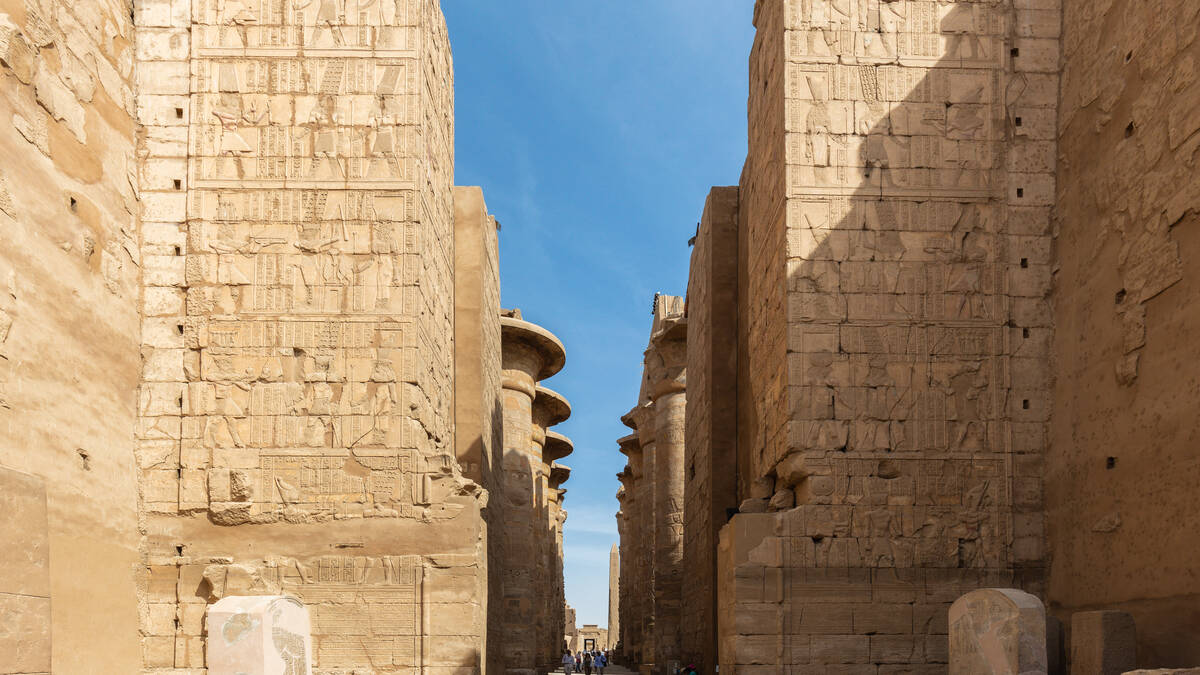
Learn it and visit it: courses that teach kemeticism, and the places held sacred to it.
The lineages
Institutions & businesses
Organizations whose work centers on kemeticism.