Core Shamanism

About this tradition
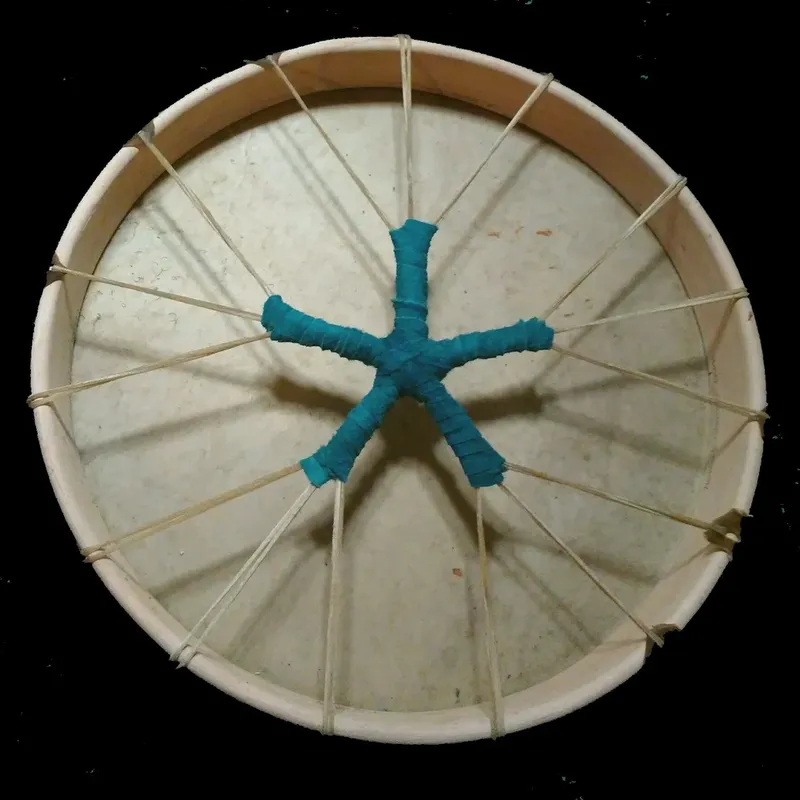
Core shamanism is a deliberately decontextualized synthesis of shamanic techniques, journeying, drumming, healing methods, created by the anthropologist Michael Harner from his fieldwork among the Jivaroan peoples of the Upper Amazon in 1961 and 1964 and his cross-cultural reading, and explicitly not an Indigenous tradition: the design principle is that the methods are separable from the cultures that hold them, the core being technique rather than doctrine, the spirit world accessible to anyone trained in the methods, spirits appearing as power animals and teachers. Its practices are the ones the library documents in their own entries: journeying driven by monotonous percussion, a coinage from Harner's own discovery that drumming could replace the ayahuasca he had used in the field, power animal retrieval, extraction healing, and soul retrieval, popularized within the lineage by his student Sandra Ingerman, whose independent training network is now the other major institutional descendant.
The institution is the Foundation for Shamanic Studies, which grew from Harner's workshops of the early 1970s through a 1979 research center to the foundation's 1985 founding, and which reports by its own materials, the figures self-reported and unaudited, some two hundred courses a year reaching five thousand people, a licensed faculty across North America and Europe, national affiliates, a tuition-scholarship program for Native American and First Nations students, and an invitation-only assistance program for Indigenous communities in the Arctic, Sámi lands, Buryatia, and Tuva. Its community is predominantly non-Indigenous Westerners, urban and middle-class, and its access is fully open and fee-based, workshops and multi-year advanced programs, which is exactly why this entry is kept categorically separate in the taxonomy from the Native American and Aboriginal Australian traditions it is sometimes confused with: this is a purchasable Western synthesis, those are closed, community-gated living traditions whose nations have formally condemned commercialized spirituality.
The critique is part of the entry's documented record: religious-studies scholars treat the method as neoshamanism and charge it with technique extraction, stripping practices from the communities that hold them and reselling them, with the Ecuadorian case the standard academic study. The tradition's own honest presentation, and the one its founder's institution has increasingly adopted, is that core shamanism offers a modern person a training in methods, with real effects for practitioners to weigh and no claim to be anyone's inheritance, and its library neighbors are written on those terms: shamanic journeying as its method, soul retrieval and extraction healing as its healing line, the Indigenous traditions as the sources it is not.
Cultural family
Where it’s found
Access
6 practices
Drum Circle & Sacred Rhythm
Community rhythm-making: the free-form circle and its facilitated cousin, the pagan fire circle's all-night drumming, and the health research that surrounds it.
Extraction Healing
The shamanic removal of intrusive energy: the sucking cures of the ethnographic record, the modern touch-free method, and the psychology that explains the visible object.
Power Animal & Totem Work
Animal spirit allies in the shamanic frame: the retrieval journey, the totem concept's real origin and its anthropological rise and fall, and the indigenous critique of the popular usage.
Psychopomp Work
Guiding the souls of the dead: the cross-cultural psychopomp, the shamanic Middle World practice, and the deathwork economy that grew around it.
Shamanic Journeying
The drum journey of core shamanism: Harner's extraction of a universal method, the three-world cosmology, the retrieval of the power animal, and the appropriation debate it carries.
Soul Retrieval
Recovering the parts of the soul that trauma scattered: the shamanic healing journey, Ingerman's systematization, and the psychology it maps onto dissociation.
The lineages
Institutions & businesses
Organizations whose work centers on core shamanism.