Uncrossing & Curse Removal
Uncrossing is the rootwork tradition's remedial art: the removal of crossed conditions, the run of bad luck across several life areas at once, the plans failing at the last step, the unnatural heaviness, diagnosed by divination before any work is taken, the tradition's reading-first rule being its most distinctive discipline. The vocabulary is the tradition's own: to cross is to thwart, the word sharpened in hoodoo from the ordinary crossed-in-love to mean that something was actively worked against you, and the practice's variants divide the work, the uncrossing for a general stuck condition with no named source, the road-opening for one specific blocked path, the reversing that reflects harm back rather than originating it.
The tradition's documentary corpus is unusually deep: the folklorist's field interviews across the American South, sixteen hundred of them gathered from the nineteen-thirties onward, their thirteen thousand remedies published in five volumes with the crossed and uncrossed running throughout; the Harlem writer's journal article of 1931 documenting the formulas; and the psychiatry's acknowledgment in the diagnostic manual's appendix of culture-bound syndromes, rootwork's attribution of illness and misfortune to hexing listed as a recognized folk idiom of distress. The formulas are documented in the suppliers' catalogues: the salt and the rue and the hyssop and the cayenne and the sulphur and the crab shell powder and the beef gall, the thirteen-herb bath the strong form, the blue baths of the old cleaning product a traditional variant.
The bath is the practice's core ritual: done before dawn, the hyssop or rue brewed as tea, the psalm recited, the jinx-breaking psalm for the crossed condition and the purification psalm whose hyssop verse gives the herb its role, the water poured over the head and the body air-dried between dressed white candles, the cycles of three and seven and nine days and the worst cases thirteen mornings. The direction matters: poured crown downward, the floor wash worked back to front, the used water thrown to the ground or the crossroads or the running water, never the drain. The egg work crosses from the Mexican tradition, its hoodoo version the black-hen egg rolled head to foot with the psalm and thrown to a tree, the contents examined for whether the work must repeat, the yolk divination explicitly outside the hoodoo frame, the crossover's attribution contested by the practitioners themselves. The candle diagnostics read the flame and wax and soot as progress reports, the reversing candle burned upside down on a mirror, the double-action burned at both ends, and the full case arc runs read first, uncross, reverse or bind if needed, protect with the mojo bag, and open the road.
The tradition's own frame holds the curse's reality in both registers: magical curses do exist, the tradition's teacher states, and not everyone who believes themselves jinxed suffers from that condition, the depression and the illness the likelier causes, hence the reading first. The psychological literature supplies the ritual's felt effect: the experimental finding that pushing-away actions lower the felt likelihood of a jinxed outcome, the studies the practice's defenders cite for what the bath does. The fraud record is the practice's documented shadow: the federal conviction of the fortune-telling family's twenty-five-million-dollar curse-removal scheme, the county's hundred-thousand-dollar sentencing, and the practitioners' own guardrails, beware anyone who tells you you are crossed before you ask, or finds a deeper curse after you pay.
The market prices the work from the mass listings' twenty dollars to the practitioners' ceremonies at ninety-five to a hundred seventy, the outliers at four figures, the suppliers' full product line, and the guild's twenty-five-dollar class. Access is open within the tradition: the bath done at home with salt and hyssop and a candle, no initiation, the debates about attribution rather than access. The entry's counsel is the reading-first rule itself: the crossed condition describes how a life feels, and the divination that precedes the work is the practice's protection, of the client and of the practitioner alike.
At a glance
- Category
- Spellcraft & Folk Magic
- Origin of practice
- The hoodoo and rootwork tradition of the American South; documented from the 1930s fieldwork
- Access
- OpenOpen to all , no initiation required. What access means
Traditions
The living lineages this practice moves within.
Tools & Materials
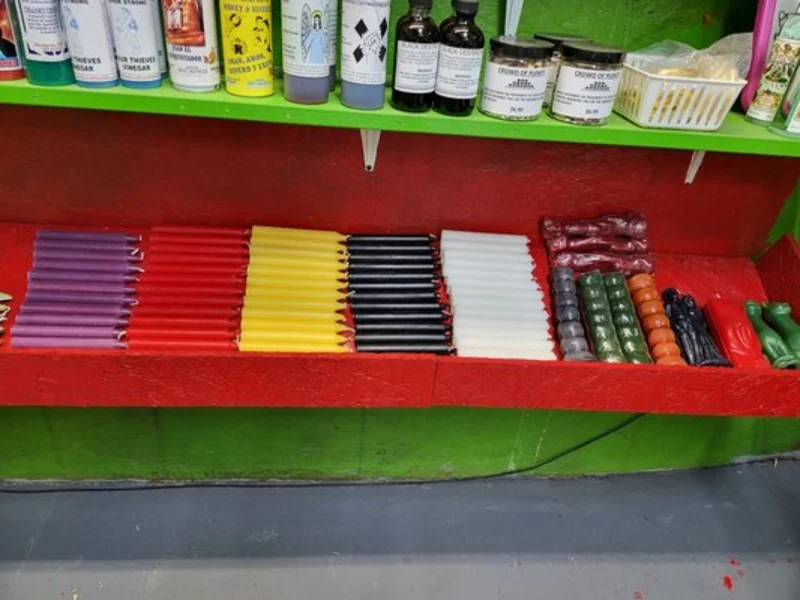
The uncrossing worker's tools are the bath and the psalm: the hyssop and rue brewed before dawn, the bath crystals and the floor wash, the white candles dressed for the drying, the incense smoked after. The diagnostics are the tradition's instruments: the divination that reads before the work, the candle's flame and wax observed, the egg rolled and examined. The reversing work adds the two-faced candles, the jumbo dipped in black and burned upside down on the mirror, the double-action burned at both ends. The suppliers' catalogues document the materia medica: the thirteen herbs and the crab shell powder and the beef gall, the full product line still sold. The tradition's texts are its record: the fieldwork's five volumes, the journal article, the supplier's online treatise, the practitioners' guides. What the practice requires beyond the bath is the sequence: read first, uncross, reverse if needed, protect, and open the road, the arc the guild teaches, and the reading the step that keeps all the rest honest.
Elements & Concepts
The crossed condition. The diagnosed run of misfortune across life's areas: the practice's subject, read before it is worked, never assumed.
The herb bath. The dawn pouring with hyssop and psalm: the practice's core ritual, its cycles of three and seven and nine, the water's disposal ruled.
The reading first. The divination that precedes all work: the tradition's protective discipline, guarding client and practitioner from the curse that is not there.
The reversing candle. The two-color or inverted burn that sends work back: the practice's escalation, its mirror and its double-action forms.
The organizations
Institutions & businesses
Organizations whose work centers on uncrossing & curse removal.