Shinto & Shugendō

About this tradition
This entry covers the two linked Japanese traditions of kami worship and mountain asceticism. Shinto, the way of the kami, has no founder, no scripture, and no dogma, and its contested status runs deeper than most revivals': the scholarly consensus holds that Shinto as an organized, independent religion is essentially a Meiji-era construction, the term appearing in the eighth-century chronicles with shifting meanings while the systematized religion dates from the state's nineteenth-century building of it, a verdict the tradition's own historians, not just outside critics, hold. Its recognized forms include shrine, domestic, folk, and sectarian Shinto, the thirteen sects designated in 1882, the imperial household's rites, and State Shinto, the 1868 to 1945 system whose postwar dismantling, the emperor's declaration that he was not a kami among them, is part of the tradition's own modern history.
The beliefs center on the kami, the countless spirits of nature, phenomena, ancestors, and deified humans, powerful but neither omnipotent nor omniscient, capricious, able to bless and to punish, and engaged through the operative axis of purity: pollution, arising from death, disease, and blood, is removed by purification. The cosmology comes from the Kojiki of 712 and the Nihon Shoki of 720, Amaterasu the sun at its center, and the ethics are thin by design, sincerity and harmony and the way of the kami, with no eschatology and no codified commandments. Shugendo, the path of training and testing, is the syncretic mountain asceticism that blends kami worship, esoteric Buddhism, and folk religion, its practitioners the yamabushi who lie down in the mountains, its worldview split between daily life and the spirit realm the mountains mediate, its pantheon running Fudo Myoo, Dainichi, and the mountain deity Zao Gongen alongside kami and bodhisattvas.
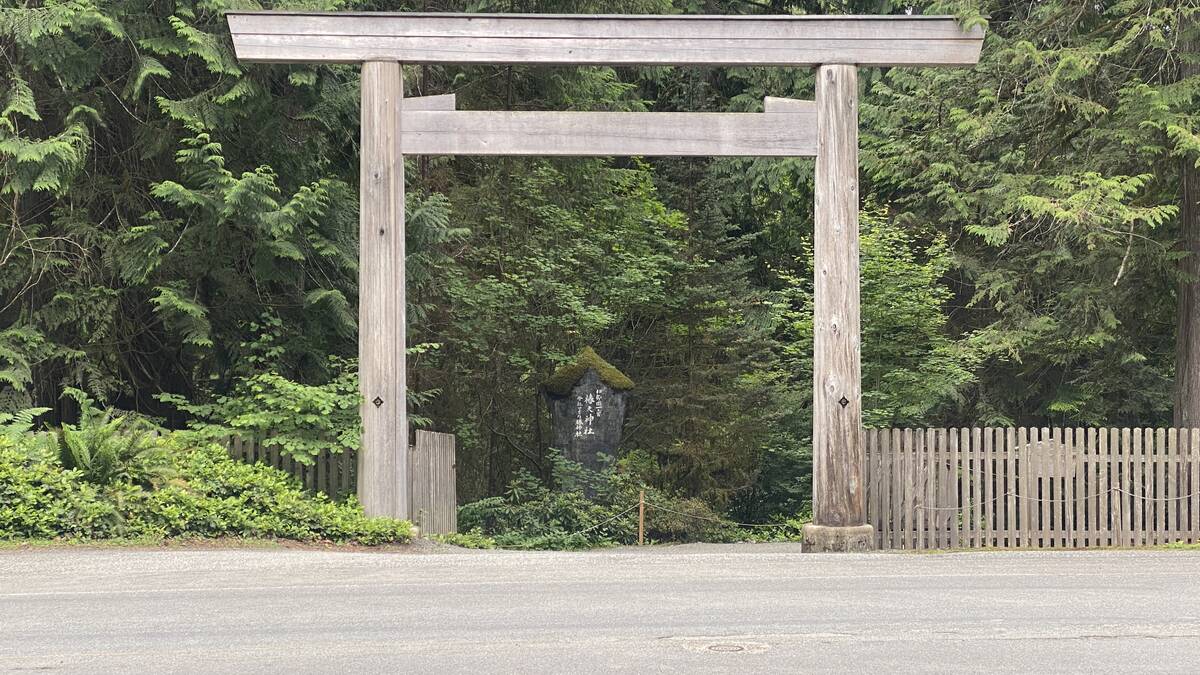
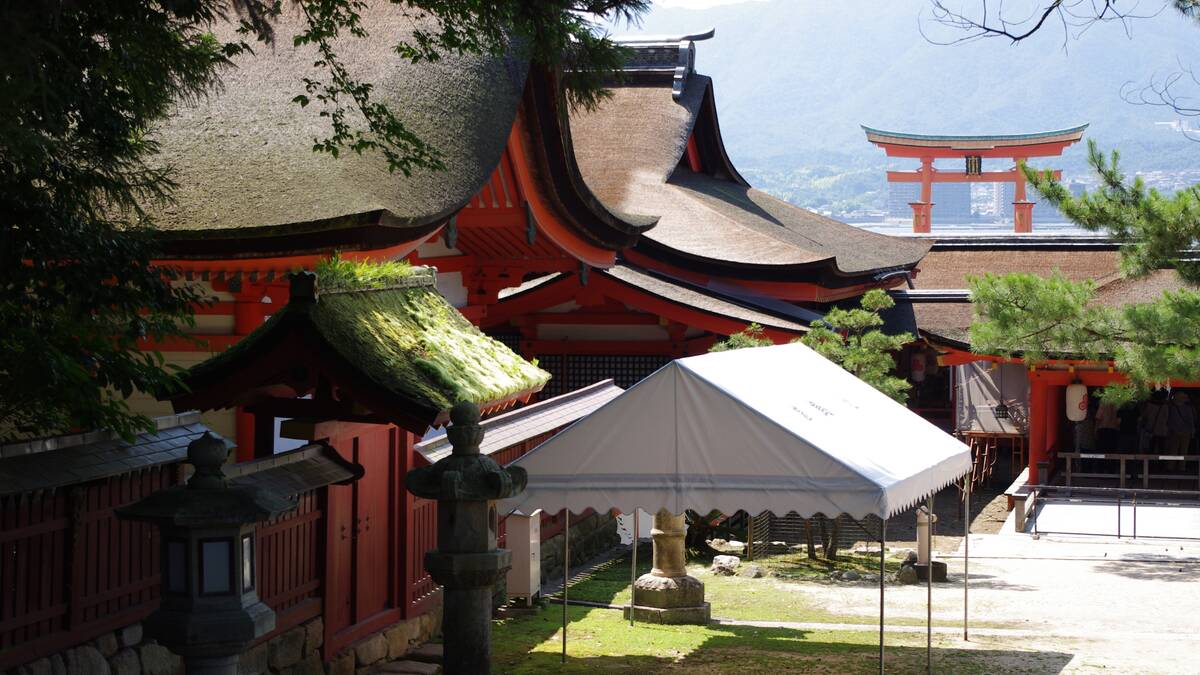
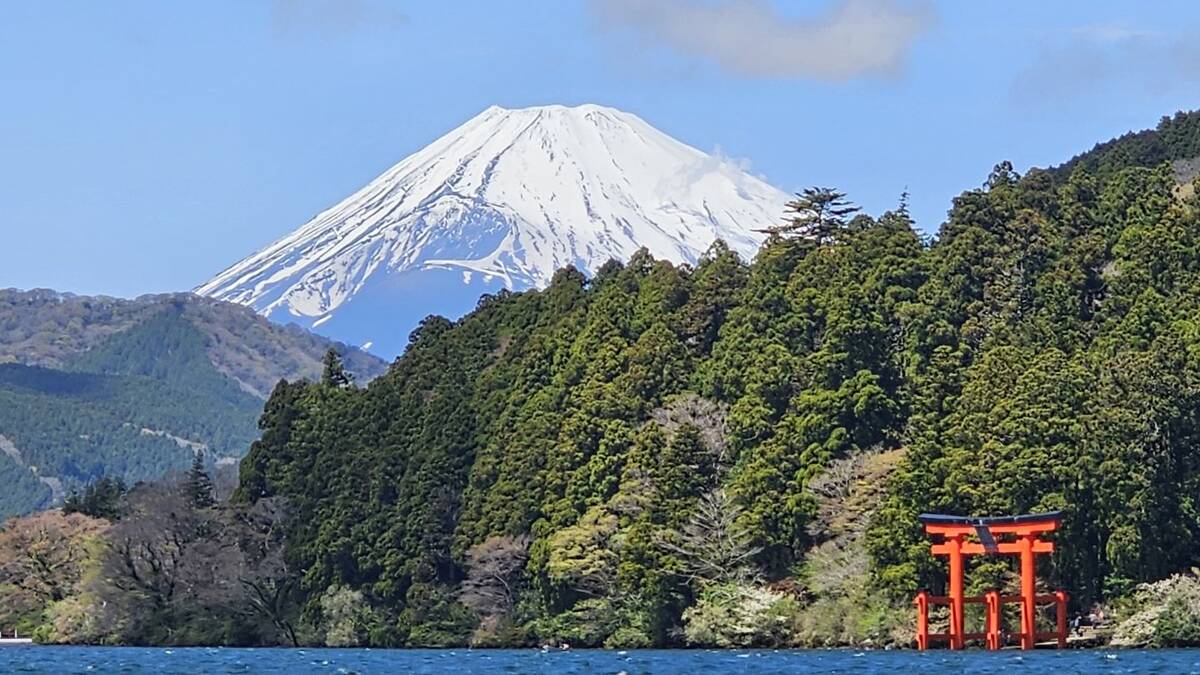
Shrine practice is the famous choreography: purification at the basin, a coin offering, the bell, two bows, two claps, and one bow, norito prayers, food and sake offerings, and no blood sacrifice, blood being pollution. Home practice runs through the kamidana shrine with daily rice, salt, and water, and the everyday apparatus of fortunes tied to trees to reject bad predictions, wish plaques, amulets, talismans, and blessing rites for cars and construction sites. Kagura sacred dance, festival processions with portable shrines, and shrine maidens fill the public calendar, while the independent spirit mediums of the northeast, the itako, stand outside the shrine system. Shugendo's practice is the mountain entry austerities, week-long and hundred-day retreats carrying esoteric initiations unique to the tradition, fire rites, fire-walking, sword-walking, boiling-water rites, and exorcism.
The calendar's stations: the year's first shrine visit, Setsubun, the new-rice festival of November 23rd, the once-per-reign midnight rite of the imperial succession, the great Kyoto festivals, with Obon belonging to Buddhism and marked as such. Shugendo keeps the autumn Peak Ritual and the hundred-day winter retreat ending at the New Year, plus the fire-walking festivals.
Where it came from, briefly: kami worship predates writing, the seventh-century Council of Kami is the institution scholars date Shinto from, the eighth-century chronicles fixed its mythology, the medieval period read the kami as Buddhist manifestations, the nativist scholars of the eighteenth century recovered a pure Shinto, and the Meiji state forcibly separated kami and Buddhas in 1868, abolished hereditary priesthoods, and built State Shinto through 1945. Shugendo evolved in the seventh century around the semi-legendary En no Gyoya, whose recorded exile in 699 is the attested kernel, absorbed Shingon and Tendai esotericism from the ninth century, organized into two schools in the Edo period, was banned by the same Meiji state in 1872 for its Shinto-Buddhist amalgamation, and revived after the war.
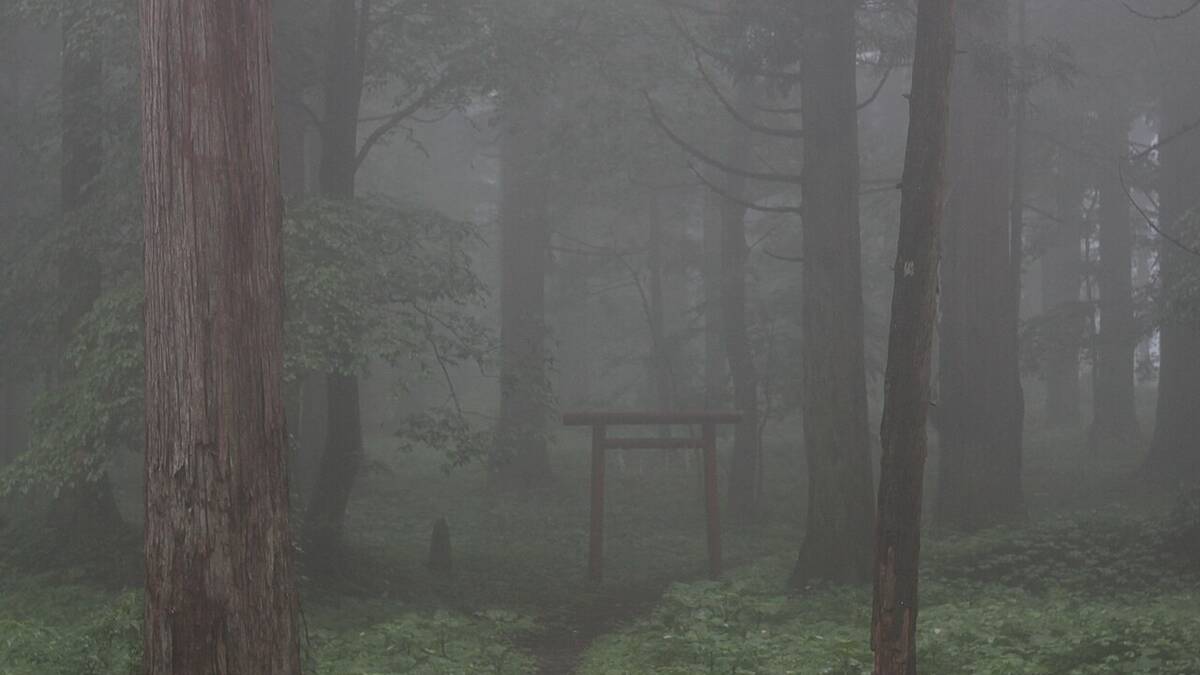
Today the Association of Shinto Shrines links some eighty thousand of Japan's roughly one hundred thousand shrines with about eighty-five thousand priests, and Shugendo runs through two institutional lines, the Tendai-based line headquartered at Shogo-in and the Shingon-based line at Daigo-ji, with practice mountains at Yoshino, Kumano, the Three Mountains of Dewa, and Ishizuchi, and a practitioner population of roughly six thousand yamabushi. The community is a paradox of participation: self-identification as Shintoist is low while participation is high, a quarter of Japanese often visiting shrines though only one in six believes the kami exist, the tradition functioning as practice rather than membership. Access is context-dependent, and the nuance matters: shrine worship is open to anyone, no conversion and no membership, while the priesthood is gated through two universities and history's first non-Japanese certified priest graduated through that program in 2012, and Shugendo's formal yamabushi status requires completing the autumn training with a lineage. One exclusion survives locally into the present: the Omine range remains closed to women under the women's boundary rule, contested and uneven, with the same region's shrines training women through their own rites while the Buddhist-line autumn training admits both sexes.
Cultural family
Where it’s found
Access
4 practices
Altar Craft
Making and keeping the altar: the household gods' niche and the butsudan's cabinet, the ancestor's photographs and the working tools, and the maintenance that is the craft.
Sacred Site Pilgrimage
Journeying to sacred places: the Camino's record years, Glastonbury's layered pilgrimage, Sedona's invented vortexes, and the communities revoking access.
Sacred Vocal & Instrumental Music
Devotional singing as practice: the chant traditions, the kirtan call-and-response, the qawwali's ecstasy, and the wellbeing research on group singing.
Smoke Cleansing
Purifying with smoke: the European fumigation traditions and the Native smudging kept distinct, the white sage black market, and the practice's own directions.
Go deeper
Immerse yourself
Learn it and visit it: courses that teach shinto & shugendō, and the places held sacred to it.