Solomonic Magic
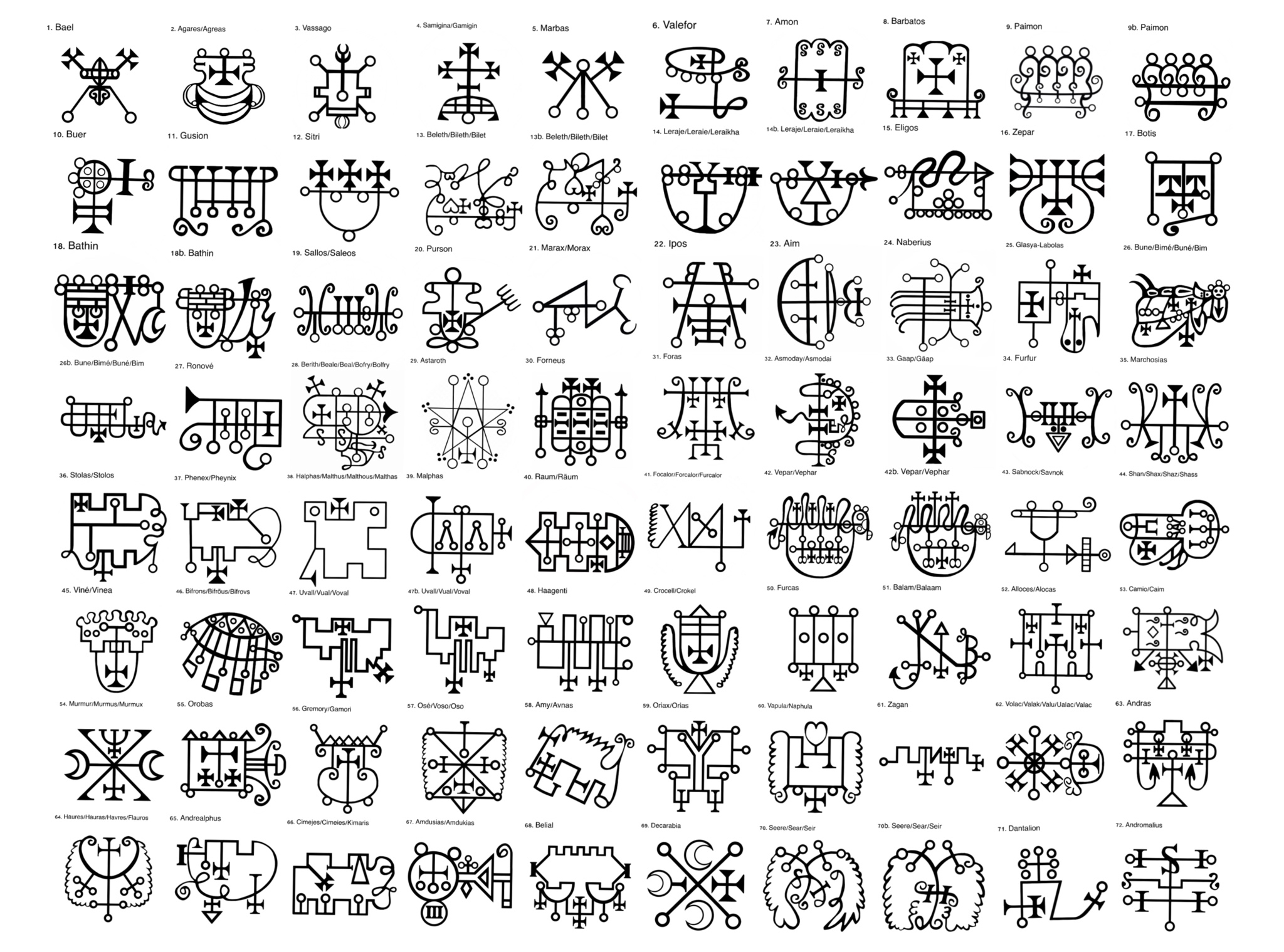
Solomonic magic is the grimoire tradition attributed to King Solomon: the manuals that carry his name, the apparatus they prescribe, and the modern practitioners who work them. The two anchor texts divide the tradition. The greater Key, actually a fourteenth or fifteenth century European composition wearing its ancient attribution, organizes the art in two books: the first on conjuration and the experiments, all power attributed to God, the second on the work's preparation, the purification, the vestments, the construction and consecration of every instrument the practice uses, knife and sword and wand and staff and circle, each with its materials, its astrological timing, and its benedictions. The lesser Key, compiled in the seventeenth century from older materials, carries the famous seventy-two spirits of the brass vessel in its first book, the goetia whose name the tradition borrowed from the Greek word for juggery, and with them the aerial spirits, the hour-angels, the scrying art, and the oratory that round out its five books.
The practice's apparatus is its identity. The operator stands inside a consecrated circle inscribed with divine names; the triangle of art stands apart at a distance as the place where the spirit manifests, scrying vessel and black-vellum cover at hand; the spirit's seal is worn or displayed; and the lamen, the secret seal of Solomon, protects the operator's breast. The timing is the tradition's inherited astrology: planetary days and hours assigned to operations, pentacles constructed in their proper hour with the Moon waxing and well placed, the electional art in service of the conjuration. Each operation closes with the license to depart, the spirit dismissed with the formula that ends the work as formally as it began.
The tradition's textual history is the scholars' territory and the revival's foundation. The manuscripts survive across the European libraries, the Greek treatise, the English clavicle, the Hebrew adaptations made for an Italian duke, their typology mapped in the manuscript scholarship; the spirit lists descend through the demonologist's catalogue into the witchcraft discoverer's appendix, the additions and omissions by which the goetia's date is fixed; and the controlling angels, the seventy-two-fold name's angels paired against the seventy-two demons in a seventeenth-century physician's manuscript, supply the tradition's most distinctive theological furniture. The Victorian edition of the greater Key put the text in print, the occultists' goetia edition added the correspondences and the psychological essay, and the twentieth century's scholars, the medievalist who categorized the learned magic tradition, the historian who wrote the grimoires' history, the practitioner-scholar who traced the goetic lineage to its chthonic roots, established the tradition's academic standing.
The modern revival rebuilt the practice on those foundations: the free critical transcriptions online since the nineties, the standard edition of the lesser key, the sourceworks series publishing the manuscripts in translation, the practitioner manuals and the supply shops outfitting the work. The practice's internal debate is recorded by its own community: the traditional constraint school holding the circle and the thwarting angels as non-negotiable protection, the chthonic school reading the demons as pagan gods under Christian names and preferring offering and contract to command, the psychological model reading the whole apparatus as deep-mind work, and the debates between them, safety against relationship, command against respect, are the living tradition's discourse. Its folk inheritances spread the seals beyond the grimoire circle entirely, the hex signs and the conjure practice adopting the spirits' sigils into traditions the grimoires never touched.
The texts are public domain and the practice is ungated: the editions free online, the translations in print, the practitioners teaching openly. The tradition's own candor, the talisman makers who state plainly that effects are unpredictable and some clients see nothing, is the entry's closing register: an old literature, honestly practiced, with its claims held in the practitioners' own terms.
At a glance
- Category
- Ritual & Ceremonial Magic
- Origin of practice
- Medieval and Renaissance Europe; the texts attributed to Solomon, the practice documented from clerical magic onward
- Access
- OpenOpen to all , no initiation required. What access means
Traditions
The living lineages this practice moves within.
Tools & Materials
The Solomonic practice's tools are the tradition's defining feature: the consecrated instruments built and blessed by the greater Key's second book, the knives and swords and wands and staffs, the robes, the circle inscribed with the divine names, the triangle of art at its distance, the lamen worn, the seals of the spirits constructed for each operation. The supply market outfits the work, the practitioners' shops selling the apparatus and the raw materials, and the manuscript editions, free and printed, are the instructions. The timing tools are the planetary tables, days and hours assigned per operation, the astrological election behind each working. Training runs through the revival's books and the practitioners' courses, the tradition's community carrying its debates, constraint against contract against psychology, in its own publications. The license to depart, printed in every edition, is the practice's last instrument: the work ends as formally as it begins, and the operator's discipline is measured by how the dismissal is performed.
Elements & Concepts
The circle. The consecrated boundary inscribed with divine names, the operator standing inside: the practice's primary protection, non-negotiable in the traditional school.
The triangle. The place of manifestation, set apart at a distance with its vessel and cover: where the spirit is constrained to appear, apart from the operator.
The seal. The spirit's particular emblem, worn or displayed to call it: the operation's signature, constructed to the manual's specification.
The license to depart. The closing dismissal, the spirit released by formula: the tradition's formal hygiene, and the practice's most quoted phrase.
The organizations
Institutions & businesses
Organizations whose work centers on solomonic magic.