
By Bailey Romatoski ·
Tasseography, also spelled tasseomancy, is the practice of reading the patterns tea leaves form in the bottom of a cup. After you drink the tea, the shapes the leaves settle into are interpreted as symbols: a bird for news, a ring for a commitment, a path for a journey. The reading is a conversation about what those symbols suggest.
What is tasseography?
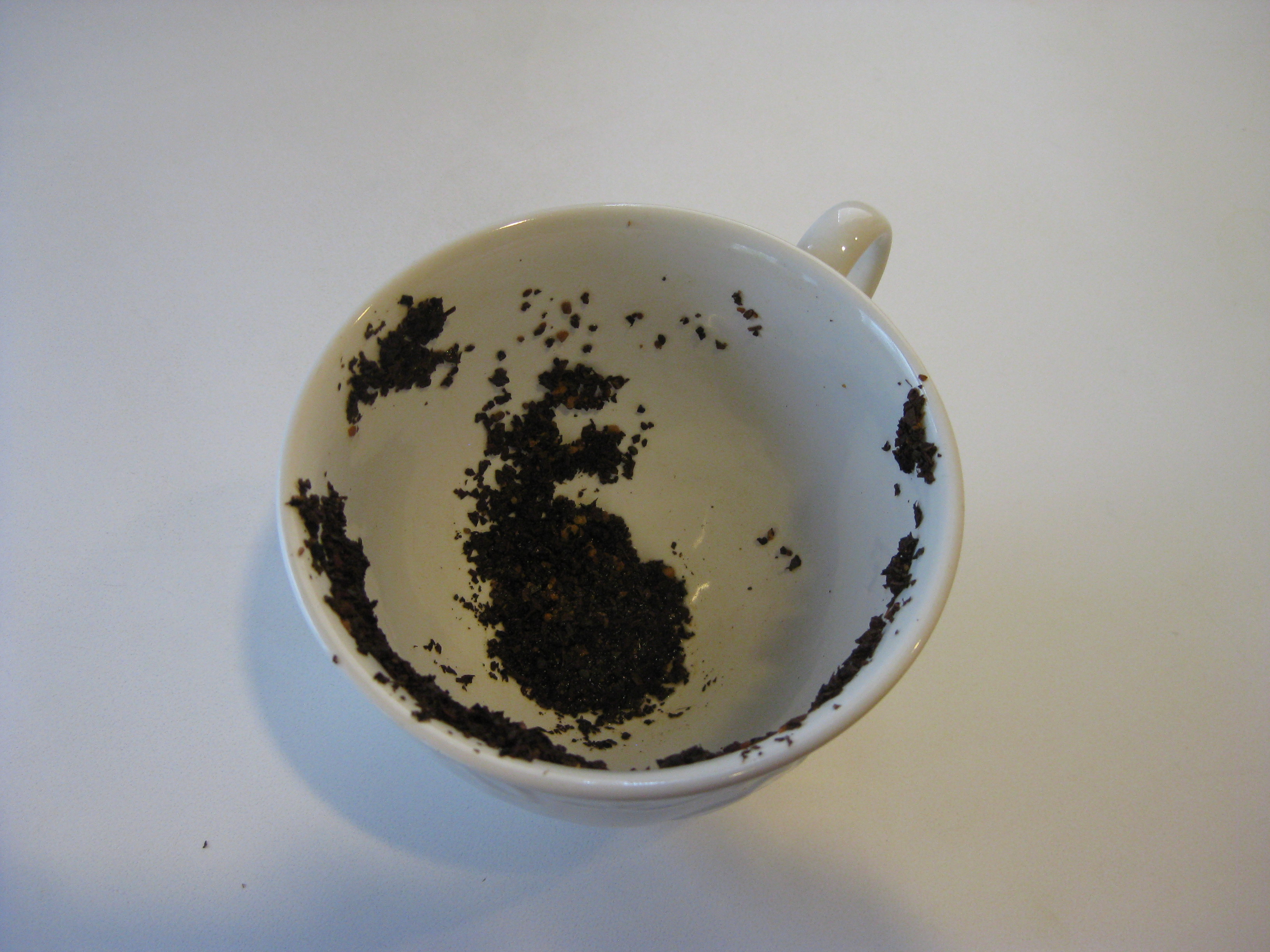
Tasseography comes from the French tasse (cup) and Greek roots meaning writing on a cup. The reader brews loose-leaf tea, the drinker drinks it, and what's left, the damp leaves clinging to the cup's sides and bottom, becomes the text. Symbol positions matter: leaves near the rim are generally read as nearer in time or more present, leaves near the bottom as further off or more distant.
The practice is closely related to coffee ground reading in Turkish and Greek traditions, where the same cup-reading logic applies to the sediment in a finjan or demitasse.
Where did tea leaf reading come from?
Tea leaf reading grew wherever tea became a daily habit, which means Britain, Ireland, and the broader European tea culture of the seventeenth century onward. It boomed in the Victorian era, when fortune-telling from tea cups was a parlor staple, and the First World War era saw a fresh wave of interest as people wanted news of loved ones. Instruction books poured out of publishers in the late 1800s and early 1900s, including Cicely Kent's "Telling Fortunes by Tea Leaves," which you can still read today for free. Tea merchants even sold cups marked with reading zones printed inside, which is where the classic fortune-telling teacup with symbols comes from.
How is a reading done, step by step?
A traditional reading runs like this. First, brew loose-leaf tea directly in the cup, no strainer, so the leaves have somewhere to go. Use a white or pale interior cup so the shapes show clearly. The drinker drinks most of the tea, leaving a small amount, about a teaspoon, at the bottom.
Then comes the swirl. The drinker (some readers insist it must be the drinker, not the reader) swirls the remaining liquid three times and inverts the cup onto the saucer to drain. When the cup is turned back up, the leaves cling to the inside in shapes. The reader studies them: the rim for the near term, the middle for the middle distance, the bottom for the far term or heavy matters, and reads the symbols in combination. Most readers will talk it through as they go and invite your reactions.
Tea leaf symbols and their meanings
Symbol dictionaries vary by reader and era, but a small core shows up in nearly every source. Here are seven you'll meet almost immediately:
- Bird: news, messages, or a visit. A flying bird often reads as news on its way.
- Path or road: a journey or a direction opening up. Clear and straight reads differently than winding.
- Ring: completion, commitment, or an agreement, sometimes an engagement, depending on where it sits.
- Key: an answer or an opening, something becoming available to you.
- Tree: growth, rootedness, or a family; a falling tree can read as a setback.
- Snake: often read as caution or a complication, though some readers treat it as wisdom or healing depending on context.
- Heart: love or affection, usually read with what surrounds it, since context on a cup is everything.
Two reading rules from the old books hold up across traditions: single symbols matter less than the patterns they form together, and the same symbol reads differently by position, near the rim or near the bottom.
Tea leaf reading meanings: how much should you weigh them?
Honestly, lightly. The symbols are a shared vocabulary, not a fixed code, and the same leaf shape could be a bird or a smudge depending on the eye. What a tasseography session gives you is a structured, human conversation about your life conducted through imagery, which is its own kind of valuable. Readers with depth bring interpretation skill: they'll tie symbols to what you've told them, notice the story forming across the cup, and leave space for your own read on it.
If a reader claims the leaves show a curse or demands escalating payments, that's not tasseography, that's a grift wearing its clothes. The old books themselves are cheerfully non-doomy; so should your reader be.
Can you read tea leaves yourself?
Yes, and it's the most beginner-friendly divination practice going, since the equipment is a cup, a saucer, and a spoon of loose tea. Brew, drink, swirl, invert, and look. Start by naming what you see before consulting any symbol list; your own associations count for a lot in this practice. Keep notes on what you saw and how the following weeks unfolded if you want to develop an eye. Traditional manuals like Cicely Kent's are free online and give you the full Victorian vocabulary if you want to go deep.
The bottom line
Tasseography reads the shapes tea leaves leave behind: a swirl, an invert, and a patterned cup become a story. It's centuries old, cheap to try, and warm by nature. The meanings live as much in the conversation as in the symbols, so pick a good listener to read for you, or become your own.