
By Bailey Romatoski ·
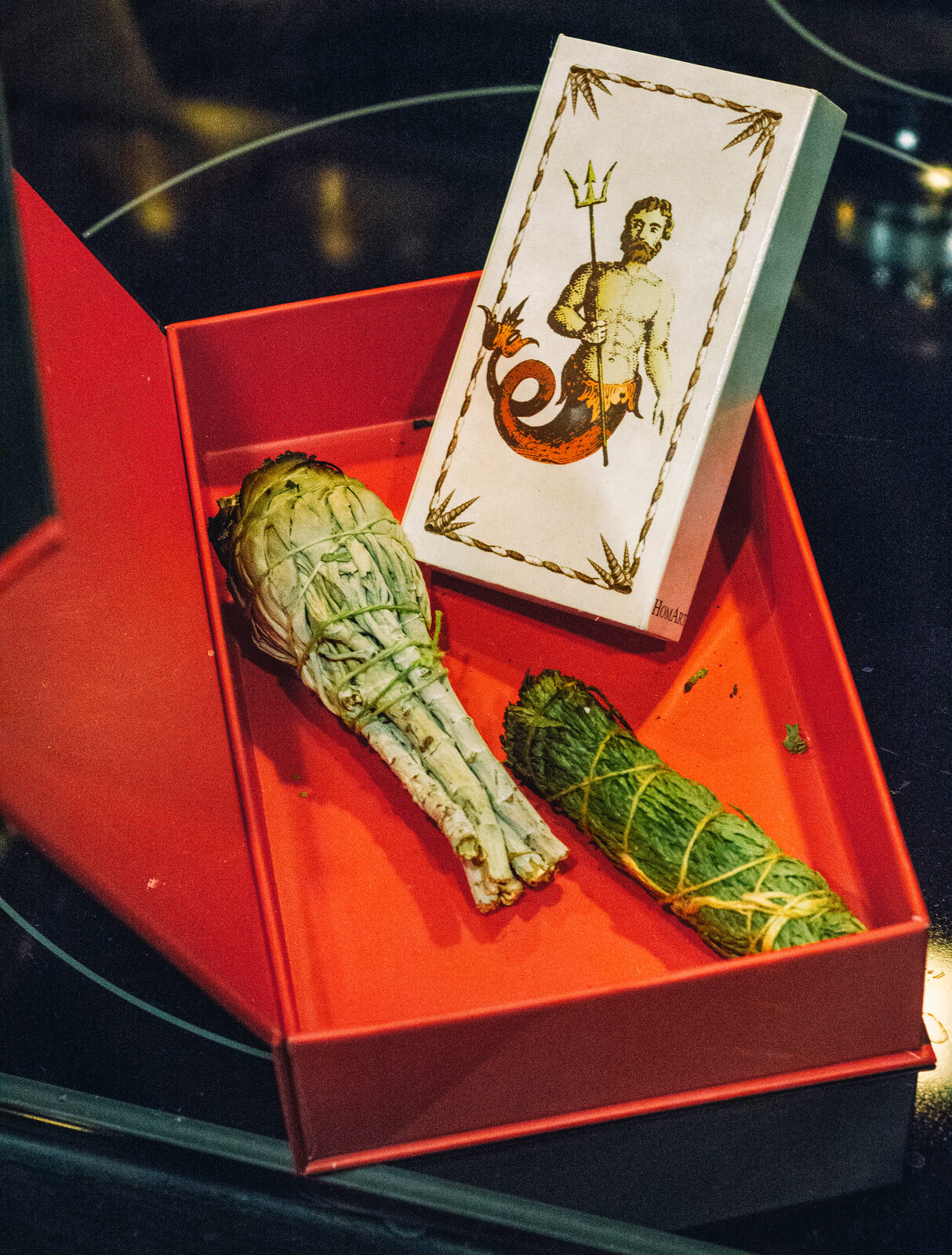
Smoke cleansing is the practice of burning aromatic plants and using the smoke to purify a person, object, or space. You have probably seen it: a smoldering bundle, a ceramic dish, someone wafting smoke into the corners of a room. Versions of the practice exist on nearly every continent, from Indigenous American ceremonies to European folk customs, and the common thread is the same belief the world over: smoke carries things away and carries intentions in.
The plants people use
Different plants, different characters:
- White sage (Salvia apiana). A silvery plant native to Southern California and northern Baja California, long used ceremonially by Indigenous peoples of the region. This is the classic "smudge stick" smell.
- Palo santo. "Holy wood" in Spanish, from trees of the Bursera genus (commonly Bursera graveolens), burned in South American traditions. The wood is dense, fragrant, and usually burned as sticks rather than bundles (source: Wikipedia, "Bursera graveolens").
- Common culinary sage, rosemary, lavender, mugwort, and cedar. European and global folk traditions used whatever aromatic plants grew locally. Garden sage is a perfectly good stand-in if that is what your garden grows.
- Incense and resin. Frankincense and myrrh on charcoal are the ancient Mediterranean form of the same idea.
The plant is not magic by itself in most traditions. The practice is the pairing of plant, intention, and act.
How it's done
If you are new, here is the plain version:
- Open a window. This is both practical and symbolic. The smoke and whatever it carries need somewhere to go.
- Light the bundle. Touch the flame to the leaf tips, let it catch, then blow it out so the material smolders and smokes rather than burns.
- Catch the embers. Rest the bundle in a heatproof dish. An abalone shell is traditional in many Indigenous practices, a ceramic bowl works fine.
- Move with intention. Waft the smoke around the space, or fan it with a feather or your hand, moving deliberately. Many practitioners go corner to corner, or around a person's shoulders and down their back.
- Say or think your intention. A simple phrase ("this room is clear") is enough. Practitioners across traditions agree the words and focus are the heart of the act.
- Extinguish. Press the smoldering tip into the dish until it stops. Never leave a burning bundle unattended.
One bundle can be reused many times. Keep it somewhere dry and it stays ready.
A note on white sage and cultural sensitivity
White sage deserves its own paragraph, and an honest one.
White sage is sacred to some Native American communities, including peoples of what is now California, and the recent craze for smudge sticks has hurt those communities. Wild white sage stands in Southern California have been stripped by poachers harvesting for the commercial market, a problem documented by reporting in VICE ("The White Sage Black Market," 2020), Atlas Obscura ("How the Rage for Sage Threatens Native American Traditions," 2022), and the Los Angeles Times ("Poachers are wiping out SoCal's wild white sage," 2022). Native writers and organizations have also raised concerns about non-Native people adopting closed ceremonial practices wholesale.
A few gestures that respect that reality: buy white sage only from Native-owned growers, or skip it and use garden sage, rosemary, or cedar, which work well and carry no burden. Grow your own, which is what the Los Angeles Times piece recommends. And if you are drawn to a practice from a specific living tradition, learn from that tradition on its own terms rather than lifting a ceremony out of context. Smoke cleansing belongs to everyone in its broad folk forms, and the respectful move is to know the difference.
Palo santo: what to know
Palo santo is widely sold and widely loved for its sweet, resinous smoke. A few practical notes. Bursera graveolens is currently rated Least Concern by the IUCN (source: Wikipedia, "Bursera graveolens"), but sourcing still matters: reputable sellers harvest fallen wood or work with local communities in Ecuador and Peru. If a price looks impossibly low, ask where the wood came from. And small doses are the norm: a stick or two lasts a long time, since you light it briefly and extinguish it after the smoke starts.
Common questions
Is smoke cleansing the same as smudging? Not exactly. "Smudging" usually refers to the specific ceremonial practices of some Native American communities, which are closed to outsiders in many cases. "Smoke cleansing" is the broader umbrella: any tradition, any aromatic plant, any method. Using the broader word is itself a small act of respect.
Is palo santo endangered? The main species, Bursera graveolens, is rated Least Concern by the IUCN (Wikipedia, "Bursera graveolens"). The real concern is ethical sourcing, since demand is high and harvest practices vary. Buy from sellers who can say where their wood came from.
Can I grow my own sage? Yes, and it is the best answer to the poaching problem. White sage grows well in dry, sunny climates; common garden sage grows almost anywhere and makes a fine bundle.
What do I do with the ash? Scatter it outside if that feels right, or compost it. Some practitioners return the ash to the earth as a closing gesture.
Do I need to be spiritual to do this? No. Plenty of people treat it as a home ritual that clears the mind the way opening a window clears the air. Others treat it as fully sacred practice. Both approaches are welcome at the table.
Is it safe around pets and babies? Be careful. Smoke irritates small lungs and birds in particular are sensitive. Ventilate well, keep animals and small children out of the room during and right after, and keep embers out of reach.