
By Bailey Romatoski ·
Scrying is the practice of gazing into a reflective or translucent surface, like a mirror, bowl of water, or crystal, to receive images, impressions, or symbols. Readers treat what shows up as a starting point for reflection and conversation, not a fixed verdict on your life.
What is scrying, in plain terms?
Scrying is divination by looking. Instead of shuffling cards or casting lots, the practitioner settles their gaze on a surface and watches what arises: shapes, flickers of light, scenes, feelings. The reader interprets those impressions and talks them through with you. Most people describe it as less like being told the future and more like a guided conversation with their own deeper attention.
Where does scrying come from?
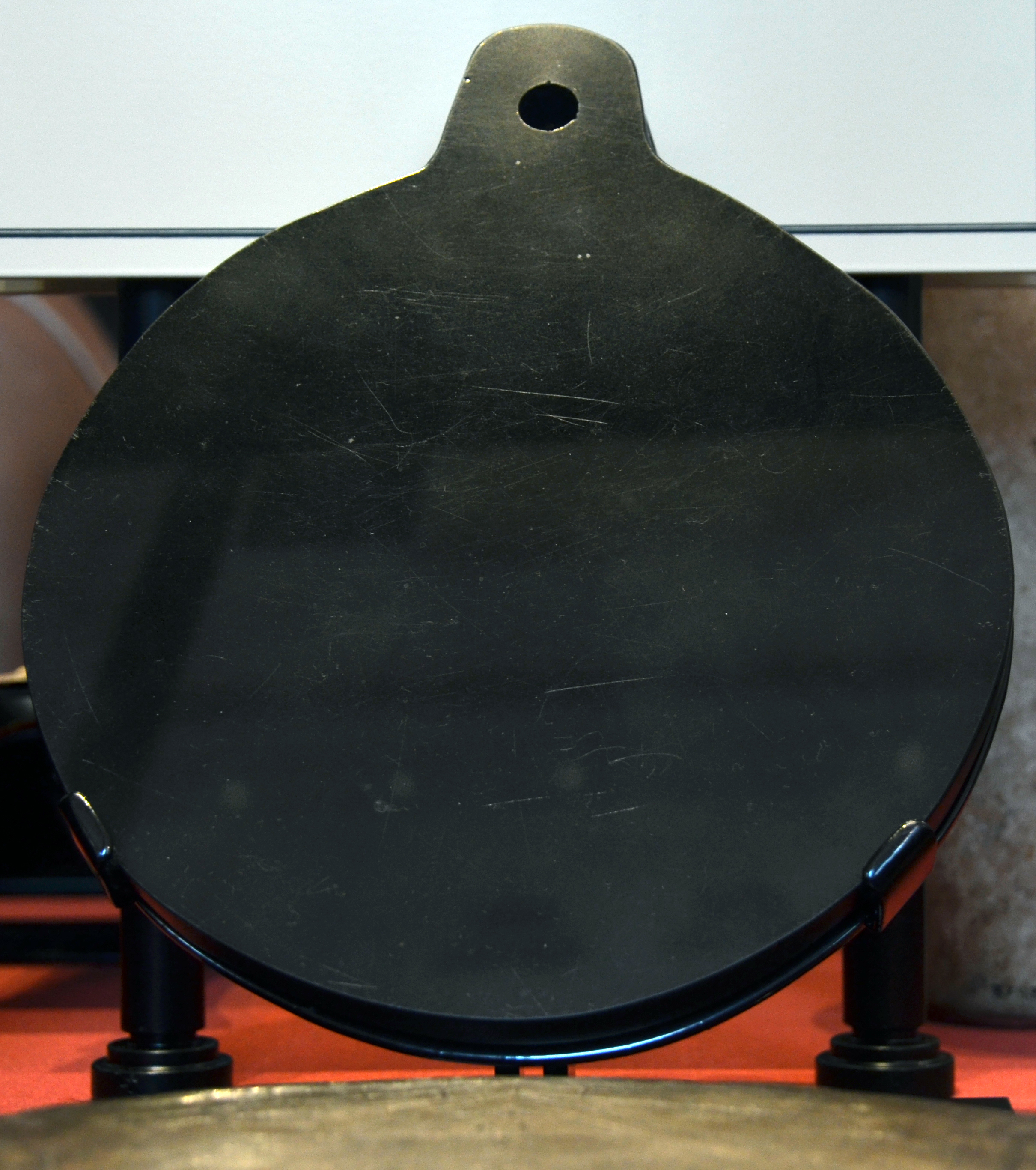
Scrying is old and widespread, which is one of the reasons it keeps showing up in museums and history books. Mirror divination (the formal word is catoptromancy) existed in the ancient Mediterranean world, and water gazing shows up in folk practice across Europe and Asia. In Mesoamerica, Aztec priests and rulers used polished obsidian mirrors for divination, and the god Tezcatlipoca is often shown with one, his name is usually translated as "Smoking Mirror."
The most famous scrying object in the English-speaking world is probably John Dee's obsidian mirror. Dee was an astronomer, mathematician, and occultist at the court of Elizabeth I, and he used the mirror in his attempts to contact angels through a scryer named Edward Kelley. A 2021 geochemical analysis confirmed the mirror's obsidian came from Aztec Mexico, so the artifact literally connects the Aztec priest class to an Elizabethan study. It's on display at the British Museum.
Crystal gazing had a huge Victorian revival too, with instruction manuals printed through the early 1900s. The practice you'll meet today descends from all of these threads.
What happens in a scrying session?
A session usually starts with a short talk. The reader asks what brings you here and what you'd like insight on, or whether you'd rather keep it open. Then they set up their medium: a black mirror, a bowl of water, a crystal ball, whatever they work with. Dim lighting is common because it softens surface reflections.
The reader gazes, sometimes for a minute, sometimes longer, and describes what they perceive. Some see literal images. Others get impressions, colors, or strong feelings they narrate out loud. You'll usually be invited to say whether anything resonates. A good session feels collaborative. Most run 30 to 60 minutes and end with the reader summarizing themes and, if you want, suggesting things to sit with.
You stay fully awake and in control the whole time. Nobody is putting you in a trance or touching your energy without asking.
Is scrying dangerous?
No. Scrying is a contemplative practice, not an invocation of anything harmful. The vivid stories about magic mirrors and spirits are history and folklore, and they can make the practice sound spookier than it is. The real risks are mundane: paying a reader who pressures you into expensive follow-up sessions, or treating a reading as a substitute for medical or mental health care.
A calm rule of thumb for any reading: you should leave feeling more informed and more steady, not frightened. Readers who trade in fear, curses, or urgency are telling you who they are. Walk away.
How do I start scrying myself?
Start cheap and simple. A bowl of water in a dim room is the classic beginner setup. Some people darken the water with ink. A black obsidian or glass mirror is the other common entry point, and hardware-store mirror paint on glass works fine if you'd rather not buy anything special.
Then it's practice, mostly of attention. Sit comfortably, soften your gaze at the surface the way you'd relax your eyes looking at stars, and stay with it for ten minutes. Most beginners see nothing at first, then get faint movement or imagery after several sessions. Keep a small journal of what arises. If you'd rather learn with guidance, a scrying reader can walk you through their method, which is a fine way to see what a practiced session feels like before investing in tools.
What kind of surface should I choose?
Choose by temperament, not by rule. Water is gentle and forgiving, and it's the oldest form. Black mirrors are popular because the matte dark surface is easy on the eyes and gives the imagination something to rest on. Crystal balls are the showpiece version, and polished stone like obsidian carries the longest lineage. All of them work the same way: a resting place for the eyes so the inner eye can do its thing.
The bottom line
Scrying is one of the oldest divination practices on record, from Aztec obsidian mirrors to Dee's study in Elizabethan England to the bowl of water on your kitchen table. It works through relaxed attention, not ritual drama. Go in curious, keep your expectations light, and treat what you see as a mirror in both senses: something to look at, and something that shows you yourself.