
By Bailey Romatoski ·
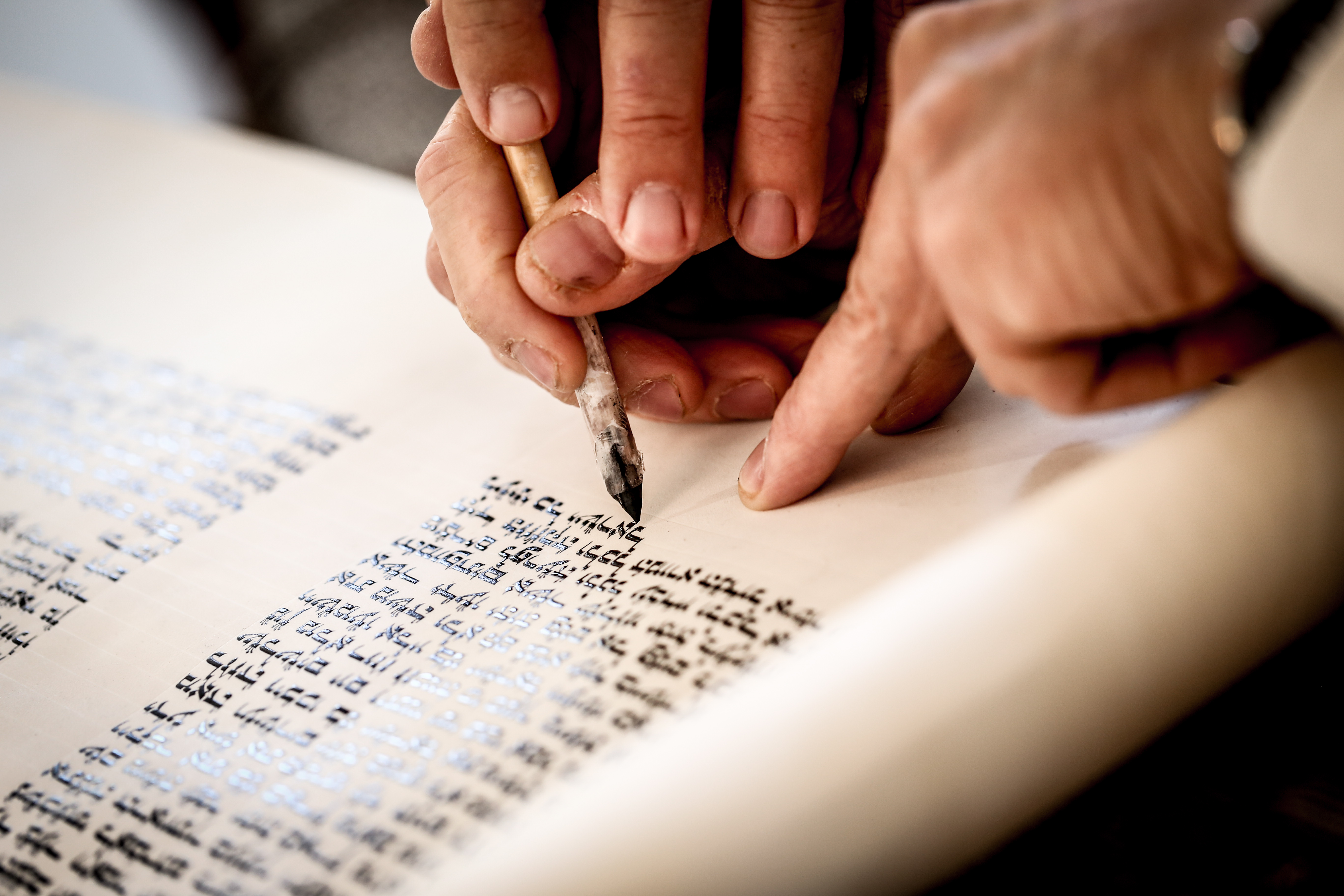
Gematria is the practice of finding meaning in the numbers hidden inside words. Each letter of an alphabet carries a numeric value, so every word is also a sum, and when two words share a sum, readers ask what they're telling each other. It grew up inside Hebrew scripture and Jewish mysticism, and it's still practiced in Torah study today, with cousins in Greek and a popular English offshoot online.
What is gematria, exactly?
At its simplest, gematria is arithmetic on words. In the Hebrew alphabet, every letter has a numeric value: alef is 1, bet is 2, and so on up to tav at 400. Add up a word's letters and you get its number. Add up another word and if the numbers match, that's a meaningful connection waiting to be interpreted. The most famous example known to almost everyone: the Hebrew word for "life," chai, sums to 18, which is why 18 is a lucky number in Jewish tradition and why gifts and donations often come in multiples of it.
But gematria isn't only matching sums. Readers track the value of whole verses, look for hidden words at letter intervals, and use variant systems (some count final letter forms differently, some reduce numbers to single digits) that each bring out different patterns. In the mystical traditions, a word's number is a thread to pull: pull it and you find the verse it links to, and behind that, an idea the text has been carrying all along.
Be clear about what it is and isn't: gematria is primarily a way of reading texts, not a question-and-answer oracle the way tarot or bone casting is. People do bring their names and questions to gematria readers, but the practice's home is interpretation, working out what scripture is saying through its numbers.
Where does gematria come from?
Gematria has ancient roots. The Greeks had isopsephy, the same game played with their alphabet, where matching letter sums between words carried religious and literary meaning, and the Hebrew practice likely developed in conversation with it. By early medieval times, gematria was an established tool of Jewish biblical interpretation, appearing in rabbinic literature and later in the great commentaries. One of the most cited users is the 13th century commentator Baal HaTurim, whose Torah commentary is famous for packing in numeric connections between words and verses.
The practice deepened inside Kabbalah, the Jewish mystical tradition, where the numbers of words became a path into the text's hidden layers, alongside other interpretive methods like letter substitution and permutation. It's worth saying plainly: gematria belongs to a serious intellectual and religious tradition with real scholarly depth. The Jewish Encyclopedia and modern Jewish learning sites document its history and rules in detail, and within Torah study it sits among several interpretive tools rather than standing alone as a fortune-telling gimmick.
Modern offshoots exist too. English gematria assigns values to the Latin alphabet, and it fuels a whole internet culture of pattern-hunting around names, dates, and headlines. Some of that is playful, some of it is numerology with a Hebrew name painted on, and practitioners of traditional gematria tend to view the internet versions with a mix of amusement and concern. Knowing the difference is part of approaching the practice well.
How does a reading work?
Gematria sessions look different from other divination sessions because the method is calculation plus interpretation. A reader (or a teacher, in more religious settings) will typically work with a specific input: your name, a word connected to your question, or a verse you bring. They compute its value using one or more of the traditional systems, then search for words and verses that share that value, and interpret the connections in light of what you asked.
A good session is transparent. The reader shows the math, names the system they're using, and explains why a connection carries weight rather than just declaring it. In a Torah study context, this looks like commentary: a verse opened up through its numbers to reveal a link the plain reading hides. In a more personal session, the reader applies the same method to your name or question and talks through what the numbers suggest. Expect depth over drama, and expect to learn something about the text itself. Sessions commonly run 45 to 60 minutes.
Gematria vs tarot: what's the difference?
These two barely overlap in shape. Tarot answers questions with cards drawn at the moment you ask; gematria works on words and texts that already exist. Tarot's symbols are standard across every deck on earth, while gematria's raw material is language itself, which makes it intensely personal: your name is the spread.
There's also a difference in what you walk away with. A tarot reading gives you a reading of your situation. A gematria session gives you a pattern in language you can go home and keep studying, and many people find that more durable. If you want an oracle for decisions, tarot will feel more familiar. If you want to dig into the hidden structure of words, and possibly of your own name, gematria is the door. Readers of both often discover they complement each other well.
How do I find a gematria reader?
Look first at tradition. Readers rooted in Jewish learning will usually be able to say where and how they studied, and many work in religious education or Torah commentary contexts where gematria is one tool among several. If your interest is the mystical tradition, look for teachers with real Kabbalistic education rather than pop-spirituality credentials. Persian, Greek, and Western esoteric readers also work with number-letter systems, and some combine gematria with other practices.
Be careful with two failure modes. The first is the internet numerologist who connects everything to everything and finds doom in every headline. The second is anyone selling certainty: real practitioners of gematria treat it as interpretive art, not a guarantee machine, and they'll say so. A reader who shows their work, names their sources, and admits ambiguity is a reader worth your time.
Questions to ask before you book
Three questions will tell you most of what you need. First: "What system or systems do you use, and where did you learn them?" You want to hear a real answer with lineage or study behind it. Second: "What happens in a session with you?" Ask whether you'll see the calculations and which text you'll work from. Third: "What do you charge, and what do you not do?" A reader who does gematria as text study rather than fortune-telling should say so, and that honesty is a good sign.
The bottom line
Gematria is a practice for people who believe words have more in them than first appears, and its numbers have been opening up scripture for well over a thousand years. Come with a word or name that matters to you, choose a reader who shows the math and honors the tradition, and expect a reading that keeps unfolding after you leave.